Wig accessories: breathable caps, non-slip bands, mannequin heads, folding stands and care kits. Everything to fit, secure and store your wig every day.




A wig is not used on its own. Wig accessories take care of three things: how well it stays on your head, the comfort of your scalp and storage between wears.
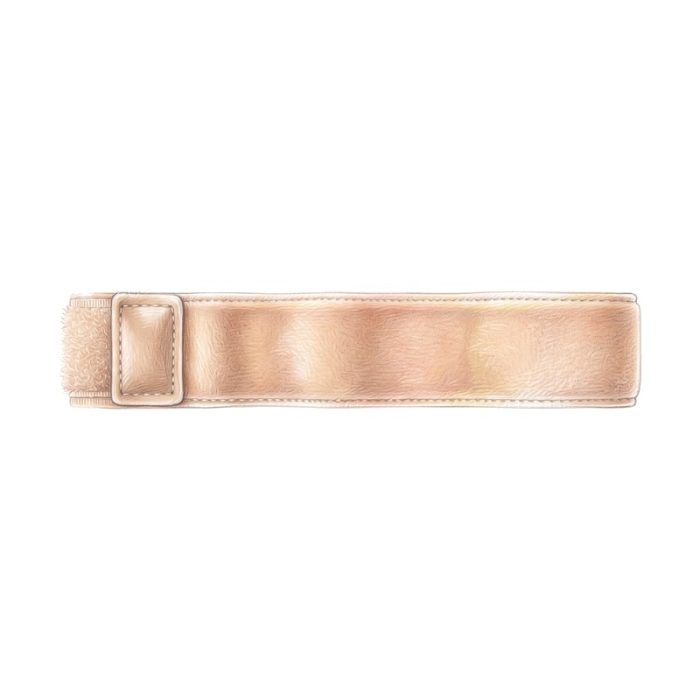
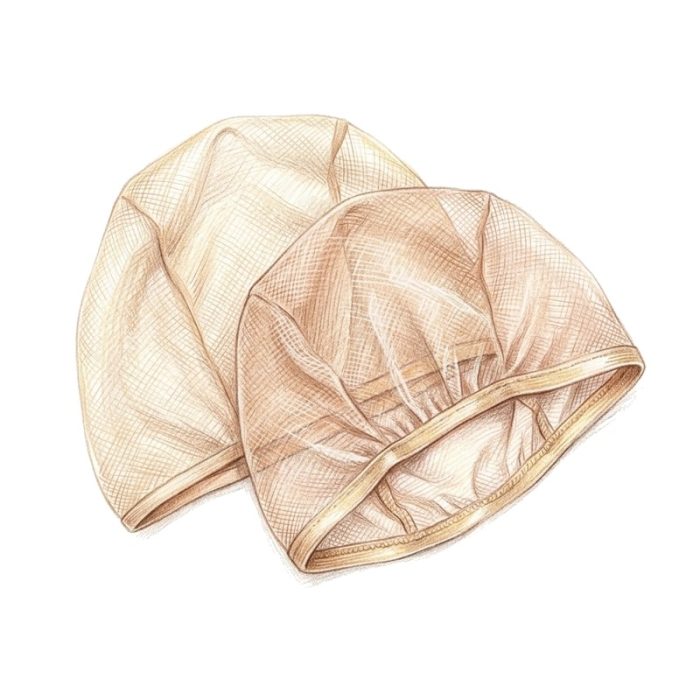
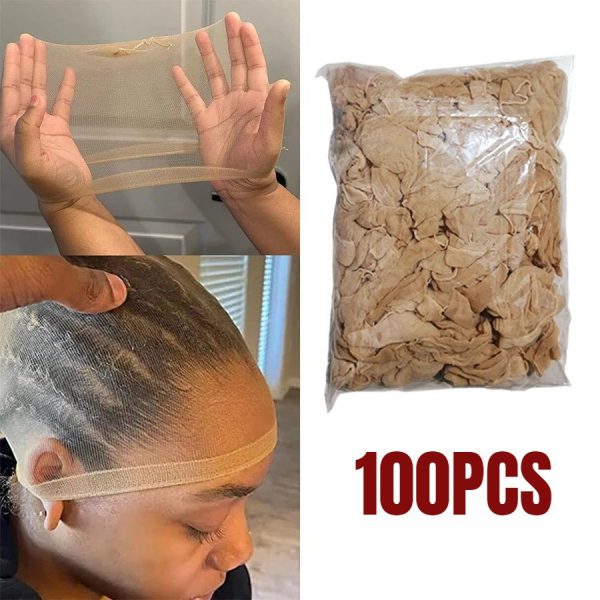
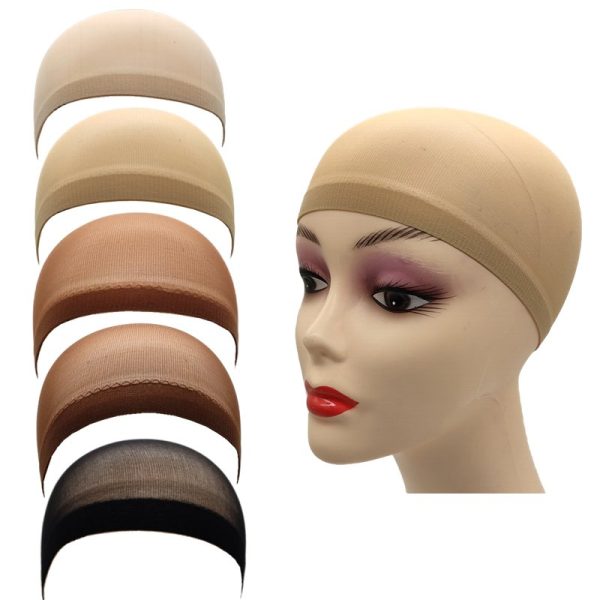
For hold, there is the wig cap and the non-slip band. The cap, in mesh or nylon, flattens your hair and gives an even surface under the wig. The band, in silicone or velvet, fastens with hook-and-loop around the head and stops the wig from slipping during the day.
For comfort, it all comes down to materials. A breathable mesh avoids the feeling of heat after two hours. A wide band spreads the pressure instead of concentrating it on the temples, where discomfort starts.
Cap size matters more than you might think. Too tight, it marks the forehead and feels uncomfortable; too loose, it creases and shows under the lace. Measure your head circumference at eyebrow level: most models cover 54 to 58 centimetres, and the sets offer several sizes.
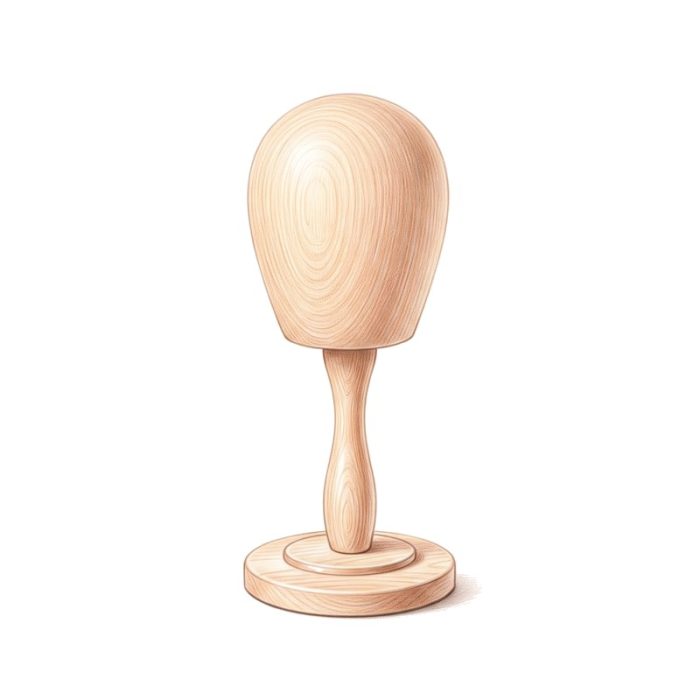
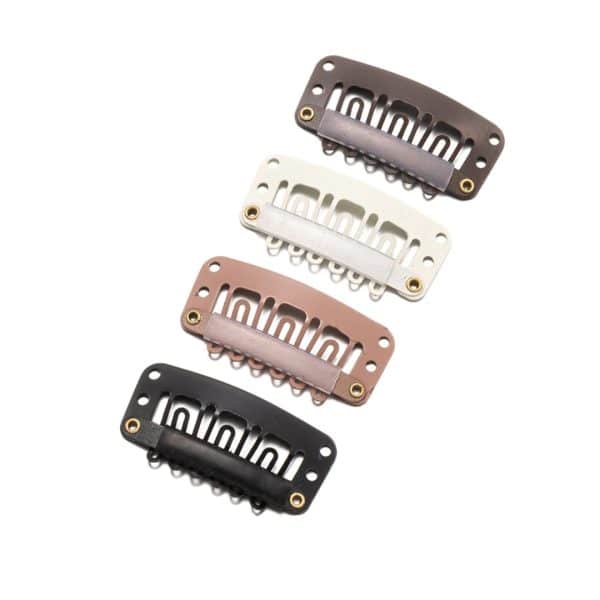
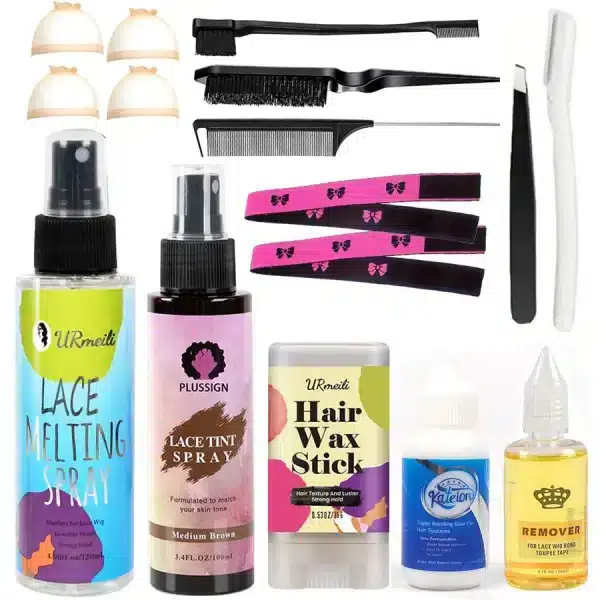
For storage, the stand does all the work. A foam or linen head keeps the shape of the wig and is used for styling; a folding stand or a hanger is enough for drying. Clips and care kits complete the kit, with their glue, holding spray and remover.
First prepare your hair. Smooth it back, in flat braids or in a low bun, with no volume on top. A bump under the wig shows more than a hair sticking out.
Then put on a cap that suits your skin tone: it should disappear under the lace, not give you away. Pull it down to cover the hairline, then place the non-slip band over it, about one centimetre from your front hairline.
Put the wig on from front to back, holding it by the temples. Adjust the inner straps before touching anything else: most models adjust on two or three notches, and a well-tightened wig already stays on without glue.
Check the result from behind and from the side, never from the front only. The wig should cover the nape without riding up, and the temples should stay flat when you turn your head. A final adjustment of the straps almost always corrects whatever is still moving.
Keep glue and spray for long days or for hair worn up. Apply a thin layer on clean, dry skin, let it become tacky, then press the lace for ten seconds. When removing it, never pull when dry: the remover loosens it without tearing the edge, which is the most fragile part of the wig.
Always store it on a form. A wig left flat in a drawer gets squashed, and the crease stays. A mannequin head keeps the cut, a folding stand takes up less space, a hanging cover protects from dust.
Wash it less often than your own hair: every 6 to 8 wears is enough for daily use. Use lukewarm water, never hot, a mild shampoo, and soak without rubbing. Rinse in the direction of the lengths, from root to ends.
Dry in the open air, on the stand, away from a radiator and from the sun. A synthetic fibre melts at low temperature: check that it is heat-resistant before bringing a straightener near it, and then stay under 180°C.
Always detangle from the bottom. Hold the strand halfway up, run a wide-tooth comb through the ends, then work up centimetre by centimetre. Finally, clean the bands and caps by hand, in lukewarm soapy water, to remove the sebum that reduces their grip.
Browse the three sections of this page: our wig caps for the base, our wig bands for hold, our wig stands for storage. Washing care and sprays are found in our wig products, and the wig itself in our wig styles.